
IEMT · Integral Eye Movement Technique
Integral Eye Movement Technique for overcoming anxiety.
Knowing why you are the way you are is half the battle. Doing something about it is the second half. IEMT does both.
Schedule a free consultation →What is IEMT?
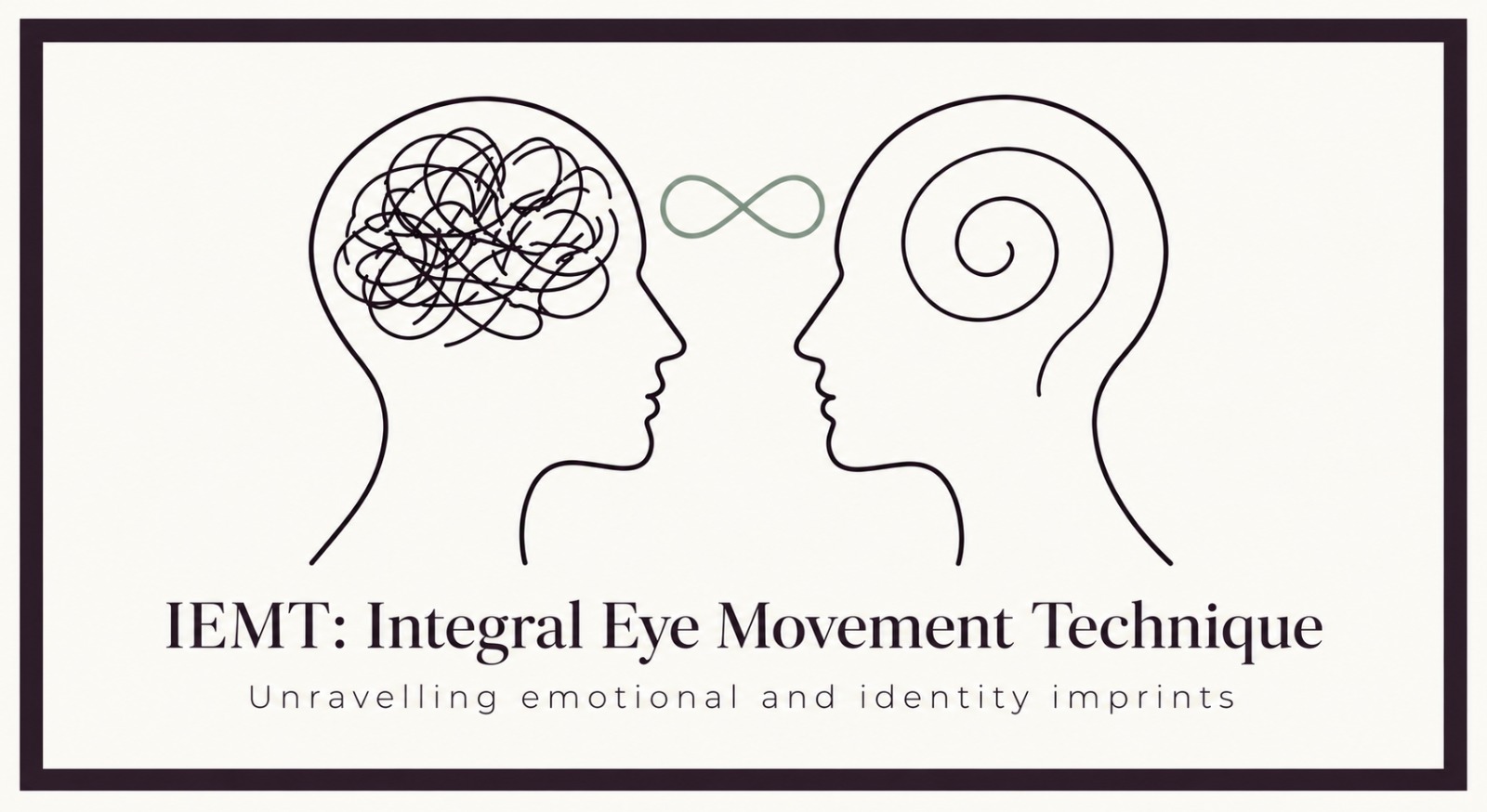
IEMT (Integral Eye Movement Technique) is an effective and swift enquiry model that works with emotional, memory and identity imprints. Many clients arrive frustrated — years of talking about their anxiety in counselling without the resolution they hoped for. IEMT often facilitates a very different experience, creating significant and lasting change.
Whether you carry unresolved emotions or explicit memories from past experiences, IEMT can work on these and the associated identity imprints — patterns that show up as anxiety, fears, phobias, low confidence, low mood or unwanted habits.
I often liken it to a house fire: the alarm goes off, they put out the fire — but nobody switches off the alarm. IEMT helps switch off the alarm.
How IEMT works
IEMT allows you to accurately measure and assess change in real time. Memories encoded to a particular timeframe are brought into the conscious mind and re-evaluated through the limbic system — the interconnected brain structures that help regulate emotion and behaviour — then consolidated as resolved.
Clients commonly describe a sense of space where the weight used to be — balance, calm, lightness, and mental and emotional clarity. The present and future no longer compete with the past, and the ripple effects can reach every area of life: relationships, work, finances, sleep, physical wellbeing, and the relationship with yourself.
IEMT vs EMDR — what’s the difference?
It’s one of the most common questions I’m asked. Both use eye movements, but they work quite differently.
EMDR
- Traumatic imagery is central — the client is encouraged to “observe” the trauma
- Uses eye movements as well as tapping and alternating sounds
- Utilises affirmations and positive belief statements
IEMT
- Traumatic imagery is largely irrelevant to the process
- Addresses imprints of emotion to create felt, kinaesthetic change
- Addresses imprints of identity to create change in self-concept
For many women overcoming anxiety rooted in old emotional patterns — rather than a single traumatic event — IEMT’s gentler, imagery-light approach can feel more accessible.
Let’s talk
Ready to stop living in survival mode?
A free 20-minute call — no pressure, no obligation. Just a conversation to see if this approach aligns with your goals.
Book your free consult →Seeing creates choice.
Choice creates freedom.
© 2020 Lily Alan. All rights reserved.